
MedXpert
StraCos & StraTos
Rib and sternal osteosynthesis
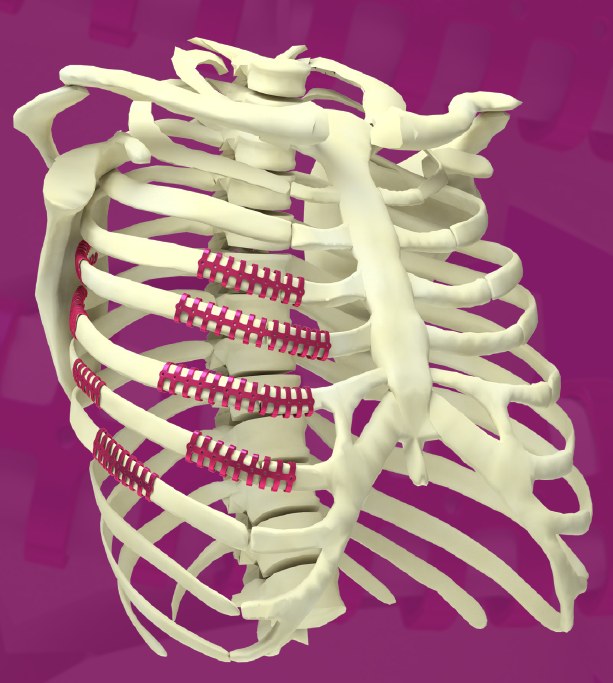
The StraTos and StraCos systems provide anatomically adaptive fixation for rib fractures, chest wall resection and sternal reconstruction, using bridge and clip fixation rather than rigid plating alone.
- Elastic bridge fixation that respects chest wall movement
- Modular clips and bridges for complex reconstructions
- Titanium implants with dedicated instrumentation
Overview
About this product
MedXpert's chest wall systems are built around a simple principle: the thorax moves with every breath, so fixation should stabilise the fracture without freezing the chest wall. StraTos uses titanium clips that grip the rib and connect to bridges of varying length, allowing the construct to follow rib curvature and accommodate defects of different sizes.
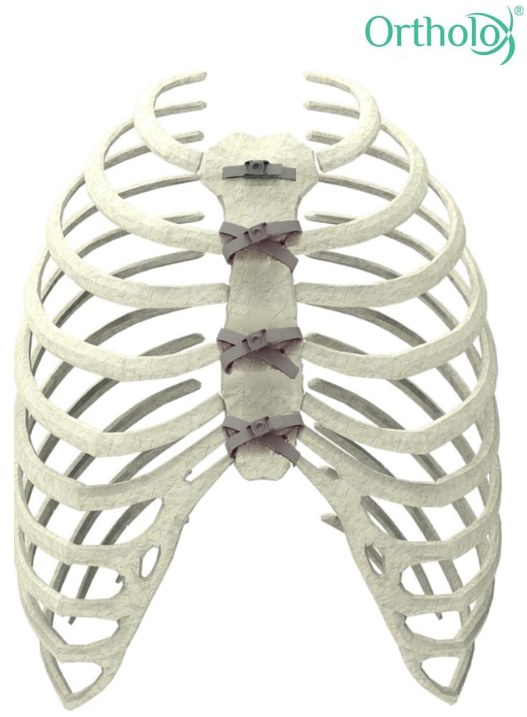
StraCos extends the same clip-and-bridge logic to costal and sternal reconstruction, including sternal non-union, dehiscence and post-resection defects. Bridges can be shaped intra-operatively and combined to span large chest wall losses after tumour resection.
Because fixation is clip-based, the implant does not require extensive periosteal stripping or long screw runs along thin rib cortex, which is particularly relevant in osteoporotic bone and in flail segments where several ribs must be stabilised quickly.
Features
Key features and benefits
Clip-and-bridge fixation
Clips grip the rib circumferentially and connect via bridges, avoiding long screw lines in thin cortical bone.
Modular reconstruction
Bridges of different lengths combine to span single fractures through to large post-resection defects.
Intra-operative shaping
Implants are contoured in theatre with dedicated benders to match individual rib geometry.
Respects respiratory mechanics
The construct stabilises the segment while allowing the physiological movement of the chest wall.
Clinical use
Applications and indications
Trauma and flail chest
Rapid stabilisation of multiple rib fractures to support weaning from mechanical ventilation.
Oncological chest wall resection
Reconstruction of rib and sternal defects after tumour resection, alone or with soft-tissue coverage.
Sternal complications
Revision of sternal non-union, dehiscence and failed wire closure.
- Rib fracture stabilisation and flail chest
- Chest wall resection and reconstruction
- Sternal non-union and dehiscence
Specifications
Specifications, sizes and models
- Implant material
- Titanium
- Fixation principle
- Clip and bridge osteosynthesis
- Systems
- StraTos (rib) and StraCos (costal/sternal)
- Shaping
- Contourable intra-operatively with dedicated benders
- Imaging
- CT and MRI compatible titanium construct
Available sizes & models
StraTos rib clips
Multiple clip sizes for varying rib thickness
Bridges
Short through to long bridges for defect spanning
StraCos sternal set
Components for sternal reconstruction and revision
Instrument tray
Reusable benders, forceps and clip appliers
Technical
Important technical information
- Select clip size to the measured rib thickness; over-sized clips reduce grip stability.
- Bridge length should allow the clip to sit on healthy cortical bone either side of the fracture or defect.
- Contour bridges before final clip closure to avoid loading the fixation during shaping.
- For flail segments, stabilise the most displaced ribs first to restore chest wall geometry.
- Full instrument reprocessing instructions are supplied with each tray.
This page is a clinical summary for healthcare professionals. Always refer to the manufacturer's instructions for use for full indications, contraindications, warnings and handling requirements.
Related
Related products
More in Cardiothoracic