
Ventura Medical
Pectus Up
Minimally invasive pectus excavatum correction
An extrathoracic technique for correcting pectus excavatum. The sternum is elevated and supported by an external plate, avoiding entry into the thoracic cavity.
- No intrathoracic instrumentation required
- Single elevation procedure
- Reduced hospital stay compared with traditional bar techniques
Overview
About this product
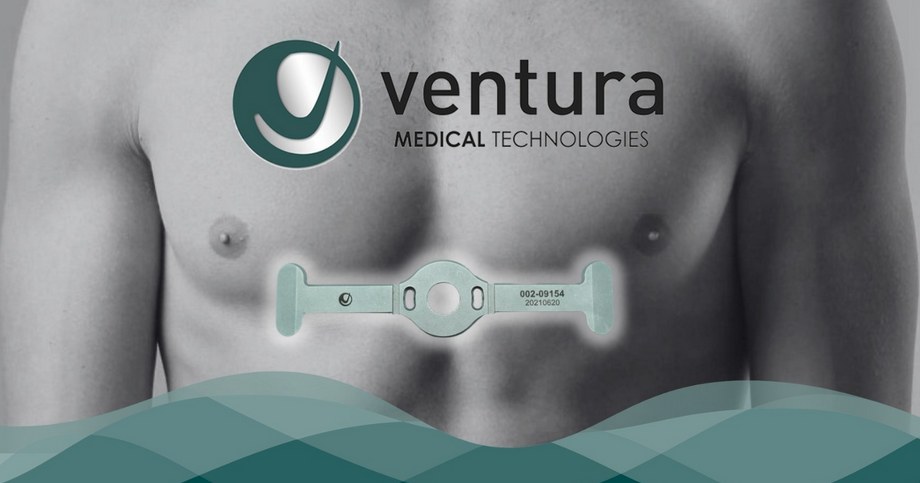
Pectus Up corrects pectus excavatum from outside the chest. Through a short anterior incision the depressed sternum is lifted with a dedicated elevation instrument and held in its corrected position by a titanium support plate fixed to the surrounding ribs and to the sternum itself.
Because the thoracic cavity is never entered, the procedure avoids the retrosternal dissection, cardiac injury risk and thoracoscopic access associated with bar techniques. There is no bar rotation step and no intrathoracic hardware to migrate.
The correction is achieved in a single elevation, and the implant is typically removed after the chest wall has remodelled. Patients generally report a shorter and less painful recovery than with traditional bar-based correction.
Features
Key features and benefits
Extrathoracic approach
The pleural space is not opened, removing the risk of cardiac or lung injury associated with retrosternal passage.
Sternal elevation system
A dedicated lifting instrument raises the sternum in a controlled, single manoeuvre before fixation.
Titanium support plate
An anatomically contoured plate bridges the defect and locks the corrected sternal position to the ribs.
Straightforward removal
Implant removal is a superficial procedure once chest wall remodelling is complete.
Clinical use
Applications and indications
Symptomatic pectus excavatum
Patients with exercise intolerance, cardiac compression or restrictive physiology on assessment.
Cosmetic and psychological indication
Adolescents and adults seeking correction of chest wall depression where surgery is clinically appropriate.
Alternative to bar techniques
Patients unsuitable for, or wishing to avoid, retrosternal bar placement.
- Pectus excavatum correction in adolescents and adults
Specifications
Specifications, sizes and models
- Implant material
- Titanium alloy plate and locking screws
- Approach
- Extrathoracic, anterior mini-incision
- Thoracoscopy
- Not required
- Typical implant dwell
- Removed after chest wall remodelling
- Sterility
- Supplied sterile, single use
Available sizes & models
Plate sizes
Range of plate lengths and curvatures to match chest width
Fixation screws
Locking screws in multiple lengths for rib and sternal purchase
Elevation instrument set
Reusable lifter and ancillary instruments
Technical
Important technical information
- Pre-operative CT is used to assess the Haller index, sternal geometry and plate sizing.
- The elevation instrument must engage the deepest point of the sternal depression before lifting.
- Confirm plate seating and screw purchase on both rib ends before releasing the elevator.
- Post-operative activity restrictions apply for the first weeks while soft tissue consolidates.
- Implant removal is planned with the operating surgeon, typically after chest wall stability is established.
This page is a clinical summary for healthcare professionals. Always refer to the manufacturer's instructions for use for full indications, contraindications, warnings and handling requirements.
Related
Related products
More in Cardiothoracic